தயாரிப்பு விளக்கம்
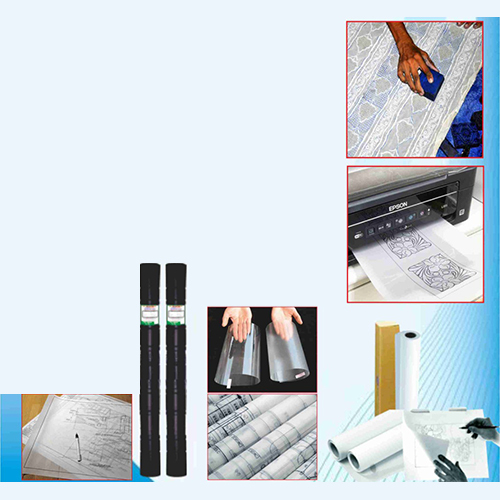
Manual drafting is the traditional practice of creating technical drawings by hand (with pencil or ink). Generally, the drawings are created on a medium such as paper or polyester film, and they are made with drafting instruments and equipment. Manual drafts are usually created on standard sizes of paper, tracing paper, vellum, or polyester drafting film. The selection of drafting media is based on how the drawings are used and whether they will be plotted (printed) or drafted by hand. Drafting papers are used for sketching, design development, and to create final drawings. Drafting films are sturdier and more dimensionally stable substitutes for drafting paper. Bond paper is the standard medium for printing CAD drawings. For Embroidary and Carpet Industry it is used as the Stencil to create transferable dots on fabric to make the hand embroidery process to go simpler and faster in execution.
Available Sizes
- 40" x 20 Yds
- 40" x 50 Yds
- 40" x 50 Mts
- 2" x 50 Mts
- 48" x 50 Mts
Also available custom built Sizes
Thickness
- 36 Mic, 50 Mic, 75 Mic, 100 Mic, 125 Mic.
Single Matte & Double Matte
Superior Transparency and Dimensional StabilityOur tracing drafting film boasts outstanding translucency and excellent dimensional stability, ensuring clarity for overlay work and precise plotting. Whether used for engineering drawings, architectural plans, or graphic arts, the film's smooth and moisture-proof surface maintains consistent performance. The polyester coating provides both high tear resistance and durability, making the material suitable for repeated erasures and long-term storage without degradation.
Customization for Diverse Professional NeedsAvailable in a variety of sizes such as A4, A3, A2, A1, widths up to 36 inches, and thicknesses ranging from 50-125 microns, this drafting film is fully customizable to suit project specifications. Customers can choose between matt, glossy, or plain finishes. Custom thickness and sheet/roll options support versatile applications, from manual drafting to digital printing with inkjet and laser plotters, ensuring a seamless workflow for different industries.
Optimal Storage and Handling GuidelinesTo preserve the archival quality and integrity of the drafting film, it should be stored in cool, dry conditions. Its acid-free and neutral pH composition prevents yellowing or brittleness, even after prolonged storage. Packaging in flat sheets or rolls facilitates easy handling and minimizes exposure to dust or humidity, thereby maintaining performance for critical design and documentation tasks.
FAQ's of Tracing Drafting Film:
Q: How should tracing drafting film be stored to maintain its archival quality?
A: Tracing drafting film should be kept in a cool, dry environment to ensure long-term archival quality. Avoid exposure to direct sunlight or sources of heat above 150C, and store the film in its original roll or flat sheet packaging to prevent dust and moisture accumulation.
Q: What are the main benefits of using polyester-based drafting film over traditional drafting paper?
A: Polyester drafting film offers superior transparency, tear resistance, and dimensional stability compared to standard drafting paper. Its acid-free and neutral pH characteristics ensure longevity, while the smooth surface enables erasable, reusable use without degradation or yellowing.
Q: When is it most suitable to use matt versus gloss surface finishes on this drafting film?
A: Matt finishes are ideal for manual drafting and applications requiring frequent erasure, as they prevent glare and smudging. Glossy finishes are better suited for presentations or when enhanced clarity and visual impact are required.
Q: Where can this drafting film be applied in professional workflows?
A: This drafting film is widely used in engineering and architectural drawing, graphic arts, PCB design, and overlay applications. It is compatible with inkjet, laser, and manual drafting methods, making it valuable across multiple design and documentation contexts.
Q: How does the erasable surface of the film benefit users?
A: The erasable surface allows users to make corrections or amendments multiple times without damaging the film. This reusability reduces material waste and enhances the efficiency of the drafting or design process.
Q: What customization options are available for this drafting film?
A: Customers can request custom sizes, thicknesses, and finishes (matt or glossy) to match specific project requirements. This flexibility accommodates a wide range of industrial and creative applications.